Freddie: Channeling the Electric Pulse of Modern Design
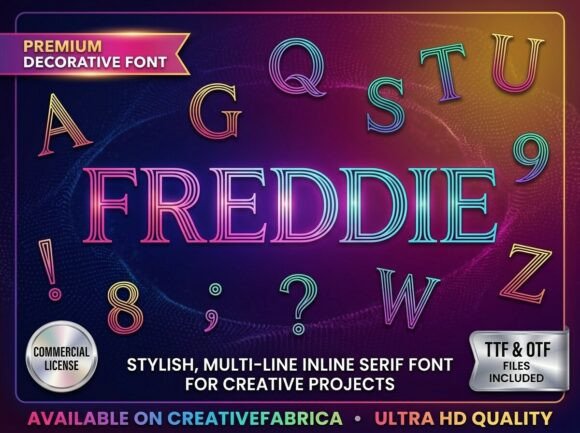
In the contemporary digital landscape, attention is the most valuable currency. For graphic designers, brand strategists, and creative directors, the challenge is no longer just about conveying information; it is about capturing the visceral energy of a moment. As we witness a resurgence in maximalism and a nostalgia for the analog-digital crossover of the late 20th century, typography has become a primary vehicle for emotion. Enter Freddie, a premium decorative serif font that does more than just display text—it electrifies creative projects with a distinct aesthetic that bridges the gap between retro-futurism and modern high-energy branding.
The Return of High-Energy Aesthetics
For years, the design world was dominated by the stark minimalism of Swiss typography and the ubiquity of sans-serif geometric fonts. While clean and functional, this approach often stripped away personality. Today, we are observing a significant shift. Consumers and audiences are craving authenticity and atmosphere, leading to the revival of expressive typography.
Freddie arrives at a pivotal moment where the aesthetics of "neon nights" are being reinterpreted for a new generation. This is not merely a nostalgic throwback; it is a sophisticated evolution. The font channels the glowing vibrancy of neon signage and the bold, unapologetic strokes of retro display types, yet it retains the structural integrity required for modern digital interfaces. It acknowledges that in a crowded marketplace, a brand must not only speak but also sing.
Understanding the Freddie Aesthetic: More Than Just a Font
To categorize Freddie simply as a "decorative serif" would be to undersell its utility. It is a typeface designed with a specific psychological impact in mind. The high-energy aesthetics it promotes are characterized by sharp contrasts, fluid curves, and a sense of motion that static text rarely achieves.
This design philosophy aligns with the broader consumer trend toward experiential consumption. Whether in the physical world or the metaverse, users want to feel immersed. Freddie facilitates this by acting as a visual soundwave. It is the typographic equivalent of a synthesizer chord—sharp, resonant, and impossible to ignore. For creators, this means that the font itself does half the heavy lifting in establishing a mood, allowing designers to focus on composition and narrative flow.
Practical Applications: Where Freddie Shines
The versatility of a specialized typeface often determines its longevity. While Freddie possesses a strong personality, its applications are surprisingly broad, provided the goal is to evoke excitement and modernity.
1. Music Festival Branding and Entertainment
The live events industry is booming, and with it comes the need for visual identities that promise an unforgettable experience. Freddie is the definitive choice for music festival branding. Its inherent rhythm mirrors the beat of electronic, synth-wave, and pop genres. When used on posters, wristbands, or digital lineup announcements, it instantly communicates the high-octane energy of the event. It moves away from the gritty, underground rave aesthetic of the past and offers a cleaner, more premium interpretation of the nightlife experience.
2. Cinematic Title Cards and Motion Graphics
In the realm of video production, the title sequence sets the tone for the entire narrative. Freddie excels in cinematic title cards, particularly for genres like cyberpunk, sci-fi, or high-stakes thrillers. The font’s structure allows it to interact beautifully with light and shadow in motion graphics. Imagine the text appearing letter-by-letter with a neon flicker effect or a lens flare sliding across the serifs. This application speaks to the growing demand for video content that feels "cinematic" even on social media platforms like TikTok or Instagram Reels.
3. High-End Nightclub Identities
Nightlife venues are rebranding themselves as lifestyle destinations rather than just places to dance. The identity of a high-end club must convey exclusivity, luxury, and excitement simultaneously. Freddie fits this niche perfectly. It balances the sharpness required for visibility in low-light environments with the elegance of a serif structure. It suggests that the establishment is sophisticated yet ready to party—a crucial balance for attracting a discerning clientele.
4. Futuristic Gaming UI and Esports
The gaming industry is one of the fastest-growing sectors globally, with aesthetics heavily influenced by cyberpunk and futuristic themes. User Interface (UI) design in gaming requires fonts that are legible but stylistic. Freddie is an excellent candidate for headers, logos, and menu screens in futuristic gaming UI. It provides the "tech" feel without looking sterile or robotic. For esports teams looking to build a brand that feels both aggressive and high-tech, Freddie offers a distinct visual voice.
Why Professionals Are Paying Attention
The buzz surrounding Freddie is not accidental; it is a response to changing workflows and client expectations. Marketers and freelancers are finding that clients are increasingly resistant to "safe" designs. The demand is for work that is viral-worthy and distinct.
One of the primary reasons professionals are gravitating toward Freddie is its ability to solve the "generic problem." Many brands look identical because they rely on the same pool of standard fonts. By integrating Freddie into their toolkit, designers can instantly differentiate a brand identity. It allows for the creation of a "visual hook" that makes a logo or headline memorable within the first few seconds of viewing—a critical metric in the age of short attention spans.
Furthermore, the font taps into the Retro-Futurism trend, which blends the optimism of the past with the technology of the future. This aesthetic is particularly popular among Gen Z and Millennial demographics, who view the 80s and 90s through a lens of stylized nostalgia. Using Freddie signals that a brand is culturally aware and in tune with these zeitgeist currents.
Integrating Freddie into Modern Workflows
Adopting a new typeface requires consideration of how it fits into existing design systems. Freddie is best utilized as a display or headline font. Its intricate details and high-energy style are designed to be seen at scale. Pairing it with a neutral, clean sans-serif for body copy is a best practice to ensure readability while maintaining the aesthetic integrity of the design.
For entrepreneurs and startups, Freddie offers a cost-effective way to establish a premium brand presence. Instead of relying on complex illustrations to convey a vibe, the typography itself becomes the centerpiece. This simplifies the design process while elevating the output. It is a strategic tool for bootstrapped brands that need to look expensive and established from day one.
The Future of Expressive Typography
We are moving away from the era of "invisible design," where typography was meant to be merely functional. We are entering an era of expression. As screens become more high-resolution and color-accurate, and as AR/VR technologies become mainstream, the demand for fonts that can render beautifully with complex lighting effects will grow.
Freddie is built for this future. Its structure is robust enough to handle digital rendering artifacts, yet detailed enough to take advantage of high-definition displays. As the line between physical and digital spaces continues to blur, typefaces that evoke a physical sensation—like the hum of a neon tube or the glow of a screen—will become essential assets in the designer's library.
Conclusion: Electrifying Your Creative Vision
In conclusion, Freddie is more than just a collection of glyphs; it is a design statement. It represents a shift toward typography that is felt as much as it is read. For professionals looking to inject life into music branding, cinematic projects, nightlife identities, or gaming interfaces, Freddie provides the perfect vehicle.
It acknowledges that in a world of noise, the only way to be heard is to resonate at a higher frequency. By embracing the high-energy aesthetics of neon nights and retro-futurism, creators can use Freddie to ensure their projects are not just seen, but remembered. It is the definitive choice for those ready to electrify their creative output and step confidently into the future of visual communication.