Spider Dead: Navigating the Dark Art of Arachnid Typography
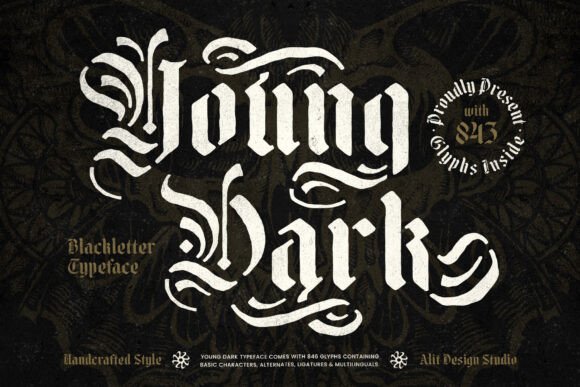
In the vast landscape of digital typography, few styles command attention quite like the blackletter family. However, when you introduce a niche concept like Spider Dead—an arachnid-themed blackletter typeface—you move beyond standard design into a realm of highly specific aesthetics. This font is not merely a collection of letters; it is a meticulously crafted tool designed to evoke menace, gothic horror, and intricate web-like drama. For designers, marketers, and creators aiming to capture a dark, edgy atmosphere, Spider Dead offers a visual language that standard fonts simply cannot replicate. But with such a specialized design comes the potential for misuse. To truly harness the power of this font without compromising your project's readability or message, you need to understand both its artistic value and its practical limitations.
The Essence of Spiderdead: More Than Just Jagged Edges
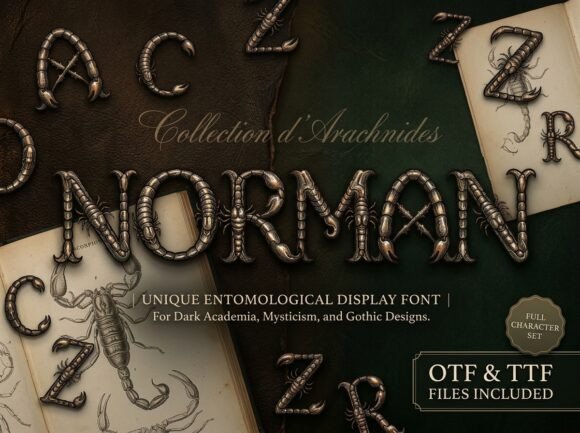
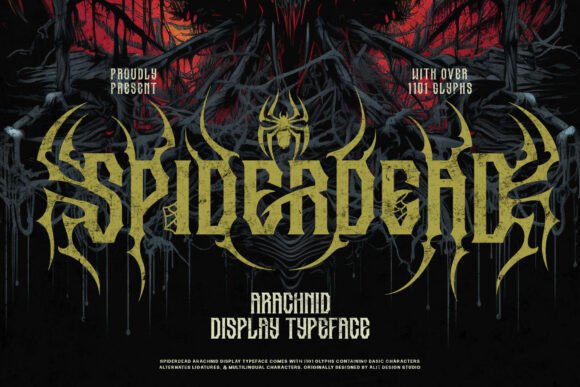
At its core, Spiderdead draws inspiration from three distinct sources: the geometry of spider webs, the anatomy of arachnids, and the sharp angles of tribal motifs. This combination results in a typeface that feels organic yet structured. The "bones" of the letters often mimic the legs of a spider, while the negative spaces within the characters may resemble the intricate patterns of a cobweb.
However, a common misunderstanding is viewing this font as a simple "scary" typeface. It is a piece of art deco meets horror. When you choose Spider Dead, you are choosing a highly decorative style. It is essential to recognize that the font works best when it is allowed to breathe. Overcrowding text set in Spiderdead can turn a dramatic headline into an unreadable mess. The visual complexity is its strength, but also its greatest constraint.
Common Pitfalls When Using Decorative Gothic Fonts
Many creators fall into the trap of prioritizing style over substance. When working with a typeface as distinct as Spider Dead, the margin for error is slim. Here are some critical mistakes to avoid and how they can derail your design.
The "Wall of Text" Trap
The most frequent error is applying this font to large blocks of body copy. Blackletter fonts, especially those with arachnid detailing, were never designed for long-form reading. The human eye struggles to track lines of text when the letterforms are highly ornamental. If you use Spiderdead for a full paragraph in a poster or a website, you will likely lose your audience's attention immediately. The result is a drop in user engagement and a message that fails to communicate.
The Better Approach: Treat Spider Dead as a display font. Use it exclusively for headlines, logos, or single-word callouts where impact is the priority. Pair it with a clean, sans-serif font like Helvetica or Roboto for the body text. This contrast allows the intricate details of Spiderdead to shine without overwhelming the reader.
Ignoring Context and Audience
Another oversight is applying the font to a context that clashes with the audience's expectations. For example, using a gothic, arachnid-themed typeface for a children’s party invitation or a corporate finance report would create a dissonance that confuses the viewer. The "menacing" quality of the font might be perfect for a heavy metal album cover or a Halloween event, but it can appear unprofessional or jarring in the wrong setting.
The Better Approach: Always analyze the emotional tone of your project. Does "danger" or "mystery" align with your brand message? If you are a freelancer working on a horror game or a thriller novel cover, Spiderdead is an excellent choice. If you are working on a generic business card, you should look elsewhere. Matching the font's personality to the project's personality is a non-negotiable rule of design.
Overlooking Legibility at Small Sizes
Typography is not just about how letters look on a large canvas; it is also about how they function at different scales. Spider Dead features fine details—thin lines that mimic spider silk and sharp points that resemble fangs. When you shrink this font down to a small size, such as on a mobile screen or a footnote, these details can blur together. The result is a muddy, illegible blob that frustrates the user.
The Better Approach: Test your design at the intended output size before finalizing. If you notice the details are merging, increase the font size or increase the tracking (letter spacing). Sometimes, adding a few pixels of space between letters can turn a chaotic word into a readable one, preserving the font's aesthetic while maintaining usability.
Evaluating Quality: What to Look For in Spiderdead
Not all themed fonts are created equal. When evaluating Spider Dead, or any similar typeface, you must look beyond the initial visual appeal. A high-quality font file ensures that your workflow is efficient and your final product is polished.
- Kerning and Spacing: Check the spacing between specific letter pairs. Does "AV" look too tight? Does "To" have too much space? High-quality fonts come with pre-set kerning tables that fix these issues automatically. Poor kerning requires manual adjustment, costing you valuable time.
- Character Set Depth: Does the font include punctuation and numbers? Many decorative fonts only include uppercase letters A-Z. If your project requires a date, a price, or an exclamation mark, you might find yourself scrambling for a matching substitute.
- Vector Integrity: If you are using the font for large-scale printing (like banners), zoom in on the vector paths. Are the curves smooth? Are the points placed efficiently? Jagged curves will be visible on large prints.
Practical Application: Pairing and Color Theory
Using Spider Dead effectively requires a thoughtful approach to color and composition. Because the font is visually heavy and complex, it demands a background that provides high contrast.
Avoid placing this text over busy photographs or multi-colored gradients. The intricate web details will get lost in the noise of the image. Instead, opt for solid, dark backgrounds—deep blacks, charcoal grays, or midnight blues—with high-contrast text colors like bone white, blood red, or metallic gold. This creates a cinematic quality that enhances the font's inherent drama.
Furthermore, be mindful of file formats. When exporting your work, ensure you are not rasterizing the text unnecessarily early in the process. Keeping the text as live vector objects allows for scalability and crispness, ensuring the "spider" details remain sharp regardless of the final output resolution.
Conclusion: Mastering the Macabre
Spider Dead is more than just a novelty; it is a powerful tool for visual storytelling when used correctly. By avoiding the common mistakes of overcrowding, ignoring context, and overlooking legibility, you can transform a standard design into something hauntingly memorable. Remember that the goal of typography is communication. Even the most menacing, gothic font must be readable to be effective. Approach Spiderdead with respect for its complexity, pair it wisely with complementary fonts, and you will create designs that strike the perfect balance between artistry and clarity.