Evaluating Norman: A Deep Dive into Ornate Filigree Serif Typography
When the goal is to evoke a specific, unambiguous atmosphere of heritage, craftsmanship, and opulence, the selection of a typeface becomes a foundational strategic decision. It is in this rarefied space that Norman, an ornate filigree serif, commands attention. This is not a font for every project; it is a specialized tool designed to communicate a very particular narrative. Understanding its character, its ideal applications, and its inherent tradeoffs is essential for any designer or brand strategist considering it for a high-stakes project.
Deconstructing the Anatomy of Norman
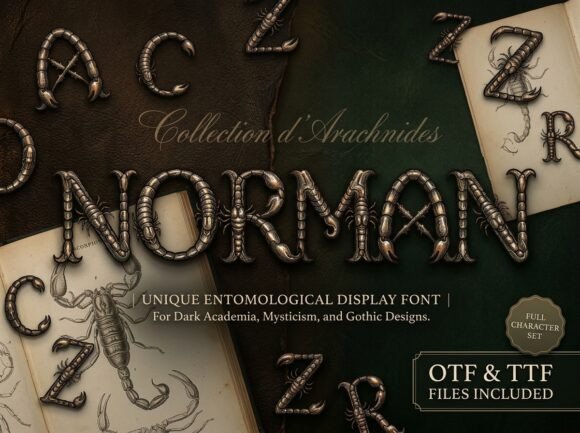
At its core, Norman is built upon a sturdy, classical serif skeleton. This underlying structure provides legibility and a sense of timeless authority. What elevates it into a distinct category is the dense, intricate overlay of hand-drawn filigree. This ornamentation is not merely decorative; it is integral to the font's identity, weaving botanical flourishes and subtle entomological motifs into the strokes of each letterform. The result is a typeface where every character functions as a miniature engraving, reminiscent of the master goldsmith's work on a vintage timepiece or the embossed details on a Victorian-era banknote.
This design philosophy creates an immediate visual hierarchy. Norman is inherently a display face, meant for headlines, logos, and short, impactful statements where its details can be fully appreciated. Its complexity makes it unsuitable for body text, but its power lies in its ability to make a single word or a short phrase carry immense visual weight and narrative depth.
Comparative Landscape: Where Norman Stands
To appreciate Norman, it helps to position it within the broader typographic landscape. It exists at the intersection of several styles, each with its own strengths.
- Against Traditional Serifs: Compared to a classic serif like Garamond or Caslon, Norman trades universal readability for dramatic presence. A traditional serif is the workhorse for elegant body copy; Norman is the showpiece for a brand's crown jewel.
- Against Modern Serifs: When placed next to a clean, high-contrast modern serif like Didot or Bodoni, Norman offers a different kind of luxury. Where modern serifs suggest sleek, minimalist sophistication, Norman communicates ornate, historical richness. The choice depends on whether the brand's story is one of Art Deco precision or Victorian artistry.
- Against Script Fonts: Ornate scripts can also convey elegance, but often with a more personal, handwritten feel. Norman provides a more structured, architectural elegance. It feels less like a signature and more like an engraved crest, offering a different flavor of formality and heritage.
The key differentiator for Norman is its specific blend of strength and delicacy. It avoids the potential fragility of some ultra-thin scripts while surpassing the decorative simplicity of many standard display serifs.
Identifying the Ideal Use Cases
The characteristics of Norman make it exceptionally well-suited for specific, high-value applications where its aesthetic can be fully realized without competing with other design elements.
Premium Product Packaging and Labeling
This is arguably Norman's sweet spot. For a high-end single malt scotch, a boutique gin, or a limited-edition cognac, the font on the label does more than identify the product—it tells a story of heritage and artisanal quality. The filigree details of Norman can echo the intricate designs found on bottle molds, wax seals, or the distillery's own historic architecture, creating a cohesive and immersive brand experience.
Luxury Brand Identity and Collateral
Brands in sectors like bespoke tailoring, high jewelry, or luxury real estate can leverage Norman in their logos, monograms, and key marketing materials. Used sparingly, it can become the central, recognizable symbol of a brand's commitment to detail and tradition. It is particularly effective for heritage brands seeking to reinforce their legacy or new brands aspiring to establish an immediate sense of established prestige.
Commemorative and Editorial Design
For special edition magazine covers, awards programs, or invitations to exclusive events, Norman sets a definitive tone. It signals that the content or occasion is of significant importance and crafted with care. In an editorial context, it can be used for pull quotes or section headers in publications focused on history, art, or luxury lifestyle.
Practical Considerations and Tradeoffs
Choosing Norman is a commitment to a specific aesthetic, and that commitment comes with practical considerations that must be weighed.
- Scalability and Legibility: The fine details of the filigree can become lost or turn muddy at very small sizes or on low-resolution screens. It is a font that demands to be used large and clear. For digital applications, ensuring high-resolution rendering is critical. This makes it less versatile for responsive web design where elements need to scale dramatically.
- Pairing Complexity: Norman is a dominant visual voice. Pairing it with other fonts requires a careful, balanced approach. It generally works best with a very simple, clean sans-serif for supporting text, allowing the ornate serif to remain the undisputed focal point. Attempting to pair it with another decorative font often results in visual clutter.
- Cultural and Temporal Specificity: Its Victorian-inspired design carries strong historical connotations. While this is a strength for brands leaning into that heritage, it may not align with a brand identity centered on futurism, minimalism, or casual modernity. The font communicates a specific era and mindset, which should align with the brand's core narrative.
- File Size and Performance: Due to its intricate vector paths, a full character set of Norman can result in a larger file size than simpler fonts. This is a minor but relevant consideration for web performance, especially if multiple weights or styles are loaded.
Making the Decision: Is Norman the Right Choice?
Ask yourself these questions when evaluating Norman against other options for your project.
- What is the core story? Is the narrative one of historical craftsmanship, meticulous artistry, and established luxury? If the keywords are heritage, bespoke, and ornate, Norman is a strong candidate. If the story is about innovation, simplicity, or approachable warmth, other typeface families will serve better.
- What is the primary medium? Will the font be used primarily in large-format print, high-resolution digital displays, or engraved/embossed applications? These environments allow its details to shine. If the primary use is small mobile screens or low-budget print runs, its impact will be diminished.
- How will it be used? Is it for a concise logo, a prominent headline, or a recurring brand element? Its role as a display type is clear. If you need a font for extended reading, website navigation, or technical documentation, Norman is not the tool for that job.
- What are the pairing constraints? Do you have the design skill and willingness to find a perfect, subdued partner font? The success of Norman in a system depends heavily on what surrounds it.
In the end, Norman is not a general-purpose typeface. It is a specialist instrument. For projects that align with its inherent character—those demanding a visual shorthand for unrivaled craftsmanship and deep-rooted heritage—it can be a transformative choice. For other projects, its very strengths can become limitations. The most informed decision comes from understanding this balance and matching the font's profound character to the equally profound needs of the brand or project at hand. When that alignment occurs, Norman