Integrating Blink Blink: A Strategic Approach to Playful Typography
In the world of design and branding, typography is rarely just about selecting letters; it is about selecting a personality. When you choose a typeface, you are making a decision that influences tone, audience perception, and emotional response. For professionals ranging from freelance designers to educators and small business owners, finding a font that captures specific energy—such as playfulness or whimsy—can be a challenge. This is where Blink Blink enters the workflow. It is not merely a decorative option but a specialized tool designed to solve specific communication problems where joy and approachability are paramount.
Understanding the Asset: What is Blink Blink?
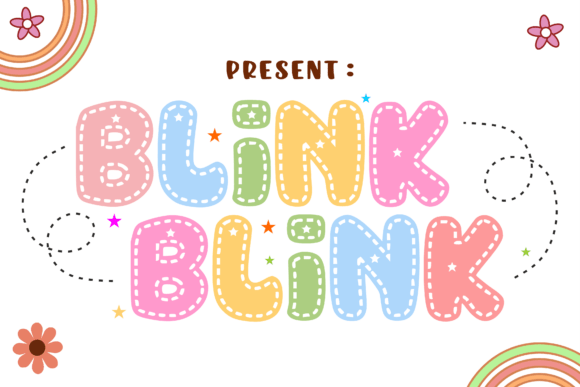
At its core, Blink Blink is a decorative display font characterized by its playful, colorful aesthetic. It features distinct stitched outlines and whimsical star cutouts within the letterforms. This design creates a texture that mimics handmade crafts, embroidery, or soft fabric, setting it apart from standard sans-serif or serif fonts used in corporate documents. Understanding these visual characteristics is the first step in the planning process. Before integrating it into a project, you must recognize that Blink Blink is a high-impact font meant for headlines, logos, and feature text rather than long-form body copy.
The "stitched" quality of Blink Blink suggests durability and care, while the star cutouts add a layer of celebration. This combination makes it an ideal asset for projects targeting children, families, or any audience seeking a lighthearted experience. However, because of its intricate design, it requires careful consideration regarding background complexity and color contrast to maintain readability.
Strategic Placement in the Creative Workflow
Integrating a specialized font like Blink Blink should happen at a specific stage in your design process to ensure efficiency. It is rarely the font you choose to write the initial draft of a manuscript, but it is often the font you select during the branding or layout phase.
Pre-Production and Planning
During the planning stage of a project—such as a birthday invitation or a children’s book cover—you should define the emotional tone. If the project brief calls for "fun," "energetic," or "handmade," Blink Blink should be added to your mood board. This allows you to build your color palette and supporting graphics around the font’s specific style. Because Blink Blink has star cutouts, you can plan to use complementary design elements, such as confetti or geometric shapes, to create a cohesive visual language.
Execution and Design
When you move into the execution phase, Blink Blink serves as a focal point. In a workflow involving software like Adobe Illustrator, Canva, or InDesign, you would apply this font to the primary header. For example, if you are designing educational materials for a kindergarten class, the main topic title ("The Solar System" or "Animal Sounds") would be set in Blink Blink to immediately signal to the student that the content is engaging and accessible. The stitched outline effect means that this font works best when it has room to breathe; tight kerning can make the letters feel cluttered.
Post-Production and Quality Control
After the design is laid out, the quality control phase involves testing the legibility of Blink Blink across different mediums. A font with intricate details like star cutouts can sometimes lose definition when printed at very small sizes or on low-resolution screens. During this phase, you should print a test page or view the design on a mobile device to ensure the "stitching" effect remains clear and does not bleed into a messy texture.
Practical Implementation and Use Cases
The versatility of Blink Blink lies in its ability to bridge the gap between professional design and casual warmth. Here is how different professionals can integrate this font into their specific workflows.
For Educators and Course Creators
Educators often struggle to make dry material engaging. By using Blink Blink for headers in worksheets or slide decks, you can instantly lower the psychological barrier to learning. The font acts as a visual cue that the environment is safe and fun.
- Workflow Tip: Use Blink Blink exclusively for section headers (e.g., "Chapter 1: Fun with Math"). Keep the body text in a clean, highly readable sans-serif like Arial or Open Sans. This contrast ensures that the page looks professional while still retaining a playful accent.
- Compatibility: Pair Blink Blink with bright, primary colors. The star cutouts in the font often look best when they are either left white (allowing the background to show through) or filled with a contrasting accent color.
For Small Business Owners and Marketers
If you run a business catering to children, such as a toy store, a pediatric clinic, or a family-friendly bakery, branding consistency is key. Blink Blink can serve as your primary logo typeface or for seasonal marketing campaigns.
- Brand Assets: Create a library of assets using Blink Blink. This includes social media headers, email newsletter banners, and thank-you cards. The consistency of the stitched texture builds a recognizable brand identity over time.
- Event Planning: For a birthday party planner, Blink Blink is essential for invitations and signage. When printing physical items, ensure your print shop uses a high-resolution setting (300 DPI or higher) to capture the fine details of the font's outline.
For Hobbyists and DIY Projects
Scrapbookers and hobbyists often look for digital assets that mimic physical textures. Blink Blink fits perfectly into digital scrapbooking or printable art projects. It eliminates the need to manually draw stitching patterns on text, saving hours of manual labor. You can use it to label photo albums, create custom stickers, or design party favors.
Integration with Other Tools and Resources
No font exists in a vacuum. To get the most out of Blink Blink, you need to understand how it interacts with other design elements.
Color Theory and Backgrounds
Because Blink Blink has a decorative outline, it can become visually noisy if placed on top of a busy background, such as a complex floral pattern or a high-contrast photograph. For optimal results, use this font on solid color backgrounds or simple gradients. If you must use it over an image, consider placing a semi-transparent shape (like a banner or a box) behind the text to separate it from the background noise.
Pairing with Other Fonts
A common mistake in design is pairing two decorative fonts together. Since Blink Blink is highly stylized, it should be paired with a neutral, geometric sans-serif font. Fonts like Lato, Roboto, or Montserrat provide a clean, modern counterpoint to the whimsical nature of Blink Blink. This hierarchy ensures that the viewer’s eye is drawn to the most important information first without feeling overwhelmed.
Software Compatibility
Blink Blink is typically distributed as a standard font file (TTF or OTF), making it compatible with virtually all major operating systems and design software. However, when using it in web design, you must consider file size. Decorative fonts often have larger file sizes than standard web fonts. If you are using Blink Blink on a website, consider using it only for the main title (H1) and loading it asynchronously so it does not slow down the page load time for your users.
Long-Term Use and Quality Control
When incorporating a specific font like Blink Blink into a long-term brand strategy, organization is vital. Create a "Brand Style Guide" document that dictates exactly how and where Blink Blink should be used. Specify the minimum font size for legibility—for instance, stating that the font should never be used below 24pt to ensure the star cutouts remain distinct.
Furthermore, consider the longevity of the design trend. While Blink Blink is timeless in its "handmade" appeal, design trends shift. By keeping the font files organized and labeled correctly in your digital asset management system, you ensure that you can easily access them for seasonal campaigns or future rebrands without having to hunt through old project folders.
Conclusion: The Value of Specialized Typography
In a professional workflow, efficiency and clarity are paramount. Blink Blink is not a font you use for a quarterly report, but it is an invaluable asset for any project requiring a human touch. By understanding its structure—stitched outlines and star cutouts—you can deploy it effectively to evoke specific emotions. Whether you are a teacher making learning fun, a parent creating a memorable birthday invitation, or a business owner building a friendly brand, integrating Blink Blink into your design toolkit allows you to communicate joy and creativity with precision and style.