Safari Friends Font: A Designer's Guide to Using Wildlife Typography Wisely
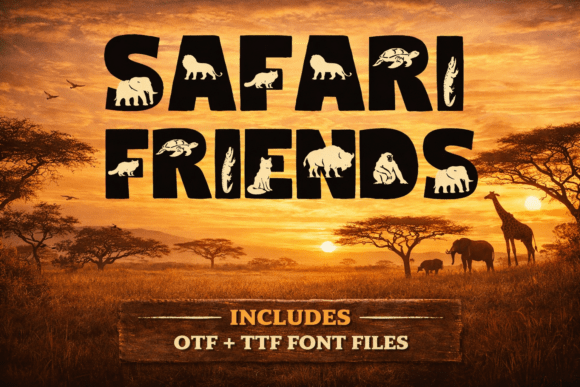
When you first encounter the Safari Friends font, it’s easy to be captivated. This isn't just a typeface; it's a bold, animal-inspired design where every letter contains the unique silhouette of a lion, elephant, fox, or bird. It promises to instantly inject the spirit of the wild into any project, making it a tempting choice for everything from zoo posters to children's book titles. However, as with any highly thematic and decorative font, there's a fine line between creating a design that roars with creativity and one that becomes unreadable or overwhelming. The key to success lies in understanding not just what Safari Friends is, but how to use it effectively within a broader design strategy.
The Allure and the Overlooked Pitfalls
The primary appeal of Safari Friends is its instant thematic impact. For a safari-themed birthday invitation, a nature camp brochure, or an educational worksheet about animals, it seems like the perfect, ready-made solution. But this is where many creators, especially those new to design, can stumble. The most common mistake is treating Safari Friends as a primary text font. Its intricate, filled-in animal shapes, while stunning in display sizes, break down rapidly when used for body copy, long headlines, or any text that needs to be scanned quickly. The result? Your message gets lost in the visual noise, defeating the purpose of clear communication.
Another frequent misstep is a mismatch in context. Safari Friends is a playful, bold display font. Pairing it with a similarly loud, playful, or overly stylized font for supporting text can create a chaotic and unprofessional look. Imagine a flyer for a wildlife conservation fundraiser using Safari Friends for the title, then a whimsical, handwritten script for the event details. The seriousness of the cause is undermined by the font combination, potentially confusing or alienating your audience. The font's personality must align with the project's overall tone and message.
Practical Application: Making Safari Friends Work for You
So, how do you harness the energy of this wildlife font without falling into these traps? The solution is strategic restraint and thoughtful pairing. Think of Safari Friends as your "headliner"—the star attraction that grabs attention. Its job is to be seen, not necessarily to convey dense information. Use it for:
- Logo Elements & Wordmarks: A single word or short phrase set in Safari Friends can become a memorable brand mark for a zoo, pet shop, or adventure travel blog.
- Event Titles & Headers: Perfect for the main title on a poster for a jungle-themed party, a summer reading program, or a nature center event.
- Feature Headlines in Digital Content: A large, impactful heading on a website page or social media graphic about animal adoption or safari tours.
- Decorative Elements: Individual letters can be extracted and used as standalone icons or illustrative accents in a layout.
The critical next step is pairing it with a clean, highly legible font for all other text. A simple sans-serif like Open Sans, Lato, or Montserrat provides a neutral, modern counterbalance that ensures your body copy, dates, locations, and call-to-action text remain crystal clear. This contrast creates visual hierarchy and allows the charm of Safari Friends to shine without overwhelming the viewer.
Evaluating and Integrating Safari Friends Into Your Workflow
Before you download or purchase Safari Friends, pause to evaluate your project's real needs. Ask yourself these questions to avoid buyer's remorse:
- What is the primary medium? Is it for large-scale print (posters, banners) or digital screens? Safari Friends works best at larger sizes. If your primary use is for small mobile app interfaces or standard document text, it is not the right tool.
- Who is my audience? While it's fantastic for children's designs, educational materials, and consumer-facing adventure brands, it may not convey the right tone for a corporate annual report or a luxury fashion brand. Know your audience's expectations.
- What is the core message? If the message is fun, adventurous, educational about wildlife, or celebratory of nature, the font is a strong candidate. If the message is serious, urgent, or technical, opt for a more neutral typeface.
- Do I have a complementary font plan? Do not proceed until you have identified a strong, legible partner font. Test this pairing in a mock-up before committing.
When you do use it, pay close attention to spacing. Decorative fonts like Safari Friends often require manual adjustments to letter-spacing (tracking) and line spacing (leading). The animal shapes can create uneven optical spacing. Tighten the tracking slightly for a more cohesive headline, and ensure generous leading so the descenders and ascenders of the silhouettes don't collide with lines of text above or below.
Beyond the Obvious: Creative and Professional Uses
For the seasoned designer or entrepreneur, Safari Friends can be a secret weapon for niche applications. Consider these better approaches:
- Branding for a Niche: A small business selling ethically sourced safari gear or a local wildlife rehabilitation center could use a single letter from Safari Friends (like an 'S' with a giraffe silhouette) as a unique favicon or embroidery design for merchandise.
- Interactive Educational Tools: An educator could create alphabet flashcards where the letter is the Safari Friends character, but the accompanying example word and its definition are set in a clear, friendly sans-serif. This leverages the font's visual appeal for engagement while prioritizing learning clarity.
- Layered Design Elements: In a sophisticated design, you might set a large, low-opacity Safari Friends letter as a background watermark behind a clean text block, adding subtle thematic depth without interfering with readability.
Ultimately, Safari Friends is a specialized tool in your typographic arsenal. Its value isn't in replacing standard fonts but in providing a powerful, joyful visual shorthand for themes of nature, adventure, and the animal kingdom. By using it sparingly, pairing it wisely, and aligning its personality with your project's goals, you can avoid the common pitfalls and ensure your designs communicate both effectively and delightfully. The spirit of the wild is best when it enhances your message, not obscures it.