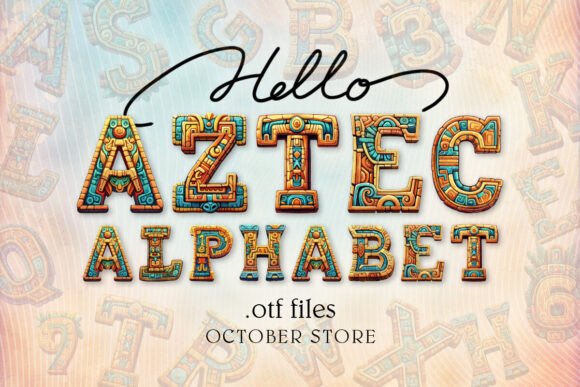
Aztec Alphabet Font: Ancient History Meets Digital Color
When we talk about typography, we often focus on legibility, kerning, and standard serif versus sans-serif debates. However, there is a distinct and growing niche in design where typography isn't just about reading—it is about seeing. This is where the Aztec Alphabet comes into play. It is not merely a typeface; it is a visual artifact. For designers looking to break away from the monotony of modern minimalism, the Aztec Alphabet Font offers a vibrant dive into pre-Columbian aesthetics, reimagined for the digital age.
The Intersection of History and Color Technology
To appreciate the Aztec Alphabet, one must understand the technology that makes it possible. This is a Color Font, specifically utilizing the OpenType-SVG format. In the past, fonts were vector outlines filled with a single color. Today, OpenType-SVG allows font designers to embed full vector graphics, including gradients, textures, and multiple colors, directly into the font file.
The Aztec Alphabet leverages this to bring the intricate, vibrant style of temple art to the foreground. Each character is a canvas, featuring a myriad of colors that dance across the glyph. This isn't just a flat representation of an ancient script; it is a high-fidelity interpretation of cultural motifs, designed to mimic the rich, textured look of painted stonework or woven textiles.
Visual Characteristics and Strengths
The defining quality of the Aztec Alphabet is its complexity. Unlike standard display fonts that might use a single outline or shadow, these characters are dense with visual information. You will notice:
- Layered Color Palettes: The font utilizes deep earth tones—terracotta, jade green, obsidian black, and gold—arranged in complex patterns within the letterforms.
- Organic Geometry: While the Aztec culture was masterful at geometry, their art often mimicked natural forms. The curves and strokes of this font feel etched rather than drawn, offering a tactile quality.
- Visual Weight: Because of the embedded imagery, the Aztec Alphabet carries significant visual weight. It commands attention immediately, making it ideal for headlines where impact is the priority over subtlety.
Practical Applications for Creators
How does one actually use a font this bold? The Aztec Alphabet is not designed for body text or long-form reading. Instead, it serves as a powerful tool for titling, branding, and decorative elements. Here is how different professionals can apply it:
Digital Media and Content Creation
For YouTubers and social media managers, thumbnail legibility is paramount. The Aztec Alphabet provides high contrast and instant recognition. A travel blogger covering historical sites or a gamer reviewing adventure titles could use this font to create click-worthy headers that stand out in a crowded feed. The "temple run" aesthetic evokes a sense of adventure and exploration.
Print and Merchandise
The Aztec Alphabet translates exceptionally well to physical products. Consider the T-shirt market or poster design. The richness of the color font means that a simple phrase printed on a shirt looks like a piece of art rather than just text. It is particularly effective for themed merchandise, event posters for cultural festivals, or book covers in the historical fiction genre.
Educational Contexts
Educators can use the Aztec Alphabet to create engaging materials for history lessons. While it is a stylized interpretation rather than a strict historical replica, it captures the spirit of the civilization. It can be used to title worksheets or presentation slides to immediately set the thematic tone for a lesson on Mesoamerican history.
Technical Considerations and Compatibility
Adopting the Aztec Alphabet requires a technical understanding of your software stack. Because this is an OpenType-SVG font, it behaves differently than a standard TTF or OTF file.
- Compatible Software: The font works seamlessly in modern creative suites like Adobe Photoshop, Adobe Illustrator, and Inkscape. It also functions in Silhouette Studio, which is vital for crafters using cutting machines.
- The Cricut Limitation: It is crucial to note that standard OTF/TTF files of this product are not compatible with Cricut Design Space as standard single-color fonts are. Cricut users generally need to upload these as "Print then Cut" images or use specific workarounds to maintain the color data, though direct font installation will often strip the colors or fail to load correctly.
- Rendering: Because the font contains embedded image data, file sizes are larger than average. Ensure your system has adequate RAM if you are using large font sizes in complex compositions.
Why This Font Matters in Modern Design
In a digital landscape saturated with clean, geometric sans-serifs, the Aztec Alphabet offers a necessary counterpoint. It allows creators to inject narrative into their typography. When you use this font, you aren't just spelling out a word; you are evoking a specific atmosphere of mystery, history, and vibrancy.
For the entrepreneur or marketer, this distinctiveness is a tool for differentiation. Branding relies on memorable visual cues. A logo or header utilizing the Aztec Alphabet suggests a brand that values depth, culture, and creativity. It tells the audience that there is a story behind the design.
Maximizing the Impact
To get the most out of the Aztec Alphabet, pair it wisely. Because the font is so detailed, it pairs best with clean, neutral backgrounds. A busy background will compete with the intricate patterns of the letters, reducing legibility. Use it for the hero text—the main title—and balance it with a simple sans-serif for any supporting body copy. This contrast ensures that the vibrant Aztec characters remain the star of the show without overwhelming the viewer.
Ultimately, the Aztec Alphabet is more than a set of glyphs; it is a design statement. It bridges the gap between ancient artistry and modern vector technology, offering a unique tool for anyone looking to add a touch of cultural richness and visual excitement to their projects.