Assessing the Cow Farm Font: A Practical Tool for Rustic Design Projects
In the current design landscape, finding typography that conveys a specific, authentic mood without appearing overly generic is a constant challenge. The Cow Farm Alphabet Letters Symbols font enters this space as a specialized asset, offering a distinct countryside aesthetic. This article provides a professional evaluation of this OpenType-SVG color font, examining its characteristics, practical applications, and potential limitations to help you determine if it aligns with your creative workflow and project requirements.
Core Characteristics and Design Intent
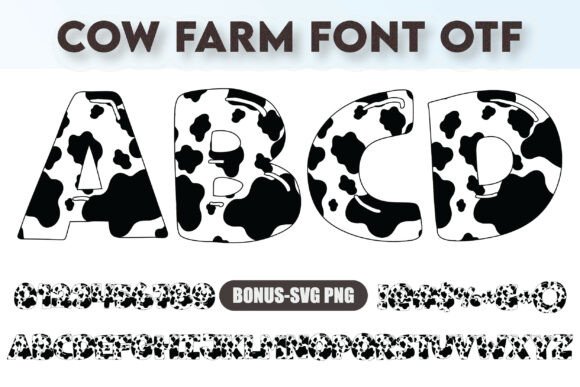
The Cow Farm font is fundamentally a decorative display typeface. Its design inspiration is drawn directly from farm life, incorporating cow patterns and a rustic, friendly character into each letterform. As a color font, specifically in the OpenType-SVG format, it embeds vector graphics that allow for complex color fills and textures—such as the classic black and white cow spots—directly within the font file. This means you can type a letter and it will appear with its full, pre-designed graphical treatment without needing to apply additional effects or outlines in your design software.
The primary purpose of this font is thematic decoration. It is not designed for body text or readability at small sizes. Its strength lies in creating an immediate visual association with rural life, dairy, farmsteads, and a wholesome, hands-on aesthetic. The "charming countryside vibe" mentioned in its description is its core value proposition for designers seeking to evoke a specific emotional and thematic response.
Practical Application and Workflow Integration
When evaluating a font like Cow Farm, its real-world usability is paramount. The product notes its compatibility with key professional software: Adobe Photoshop, Adobe Illustrator, Silhouette Studio, and Inkscape. This compatibility is crucial, as these are standard tools for graphic designers, crafters, and illustrators. The ability to use the font directly in these programs streamlines the design process, eliminating the need to treat each letter as a separate graphic element.
However, the explicit incompatibility with Cricut Design Space is a significant consideration for a segment of its target audience. Cricut machines are widely used in the crafting community for cutting vinyl, paper, and other materials. The limitation arises because Cricut's software does not support the advanced OpenType-SVG format. Users would need to employ a workaround, such as using the font in a compatible program like Silhouette Studio or Illustrator to create their text as a graphic, then importing that graphic into Cricut Design Space. This adds an extra step but does not render the font unusable for Cricut crafters, provided they are comfortable with this intermediate process.
Evaluating Strengths and Potential Limitations
The font's key strengths are its thematic specificity and visual consistency. Every character shares the same stylistic language, ensuring a cohesive look across headlines, logos, or short phrases. For projects like farmhouse signs, dairy branding, or party decor, this consistency is a major advantage, saving time that might otherwise be spent manually aligning disparate graphic elements.
The practical value is highest in targeted scenarios. A small business owner creating labels for artisanal cheese, a teacher designing classroom materials about agriculture, or a blogger crafting graphics for a farm-to-table recipe post would find this font immediately useful. It serves as a shortcut to achieving a polished, on-theme look without requiring advanced illustration skills.
Potential limitations include its niche appeal. The very specificity that makes it valuable for certain projects makes it unsuitable for others. It would be inappropriate for corporate, minimalist, or modern tech branding. Furthermore, as a display font, its legibility at small sizes or in long passages is compromised by its decorative nature. Designers must use it judiciously, typically for headlines or single impactful words, pairing it with a clean, simple sans-serif or serif font for any accompanying body text.
Long-Term Value and Audience Fit
For the right user, the Cow Farm font offers considerable long-term value. Educators can reuse it for seasonal classroom decorations year after year. Freelance designers specializing in food or lifestyle branding may find it becomes a recurring asset in their toolkit for clients in the agricultural or homestead sector. Its effectiveness lies in its ability to reliably deliver a specific aesthetic, making it a dependable resource for recurring project types.
The audience that benefits most includes professionals and serious hobbyists who frequently work on projects tied to rural themes. This encompasses not just farmers and ranchers, but also marketers for farm stands, creators of children's educational content, designers of wedding or event stationery with a rustic theme, and producers of merchandise like t-shirts and stickers for agricultural fairs or dairy co-ops. For these users, the font is not a frivolous decoration but a purposeful tool that speaks directly to their audience's expectations and interests.
Professional Observations and Recommendations
From a professional standpoint, the Cow Farm font is best viewed as a specialty component rather than a foundational font family. Its value is unlocked when used in concert with complementary design elements: a kraft paper texture background, supporting illustrations of barns or tractors, or a muted, earthy color palette. It works best when the entire design system supports the rustic narrative.
Before purchasing, consider your primary design environment. If you work exclusively within the Adobe ecosystem or Silhouette Studio, integration will be seamless. If you rely solely on Cricut, factor in the additional steps required. It is also advisable to test the font's behavior with your specific software version, as color font rendering can occasionally vary between applications.
Ultimately, the decision to incorporate Cow Farm into your assets should be based on a clear project need. If your work consistently requires a friendly, rustic, farm-inspired typographic element, this font provides a convenient and visually consistent solution. It effectively bridges the gap between custom illustration and standard typography, offering a specialized tool that, when used appropriately, can significantly enhance the thematic coherence and professional polish of your designs.