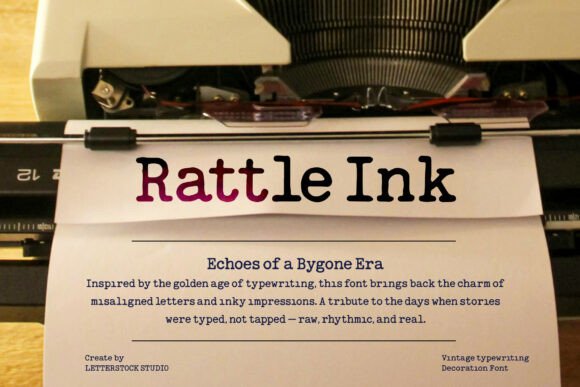
Rattle Ink: The Vintage Typewriter Font for Authentic Designs
What Makes Rattle Ink So Special?
There’s something undeniably charming about old typewritten pages. The slight imperfections, the way the ink settles unevenly on the paper, and the subtle misalignments between letters all tell a story of a time before perfect digital printing. Rattle Ink captures this essence beautifully. It’s a typeface designed to mimic the organic, slightly worn look of classic typewriter machines, bringing a layer of history and authenticity to modern projects.
Unlike overly clean, sterile fonts, Rattle Ink embraces its flaws. Each character has been crafted to include subtle ink bleeds and gentle misalignments, just like you’d find on a manuscript typed decades ago. This isn’t about achieving perfection; it’s about evoking a feeling. The font serves as a bridge between the digital precision of today’s design tools and the tangible, human touch of the past.
Who Is Rattle Ink For?
This font is a versatile tool for a wide range of creators. If you’re a small business owner developing a brand identity with a retro or artisanal feel, Rattle Ink can set the right tone from the first glance. For bloggers and social media managers, it offers a quick way to give quotes, announcements, or image text a classic, thoughtful vibe that stands out in a fast-scrolling feed.
Educators and freelancers will also find it useful. Imagine creating worksheets, presentation headers, or client proposals that feel more personal and less generic. For hobbyists involved in scrapbooking or digital journaling, it adds an instant layer of nostalgic charm to layouts and memory pages. Essentially, anyone looking to inject a sense of history, warmth, or craftsmanship into their work will appreciate what Rattle Ink brings to the table.
Practical Uses for Rattle Ink
The applications for a font like this are both broad and specific. Its value lies in its ability to communicate a particular mood without extra explanation.
- Retro Branding and Logos: For businesses like coffee shops, record stores, craft breweries, or artisan bakeries, a logo set in Rattle Ink can immediately convey a sense of tradition, quality, and hands-on care.
- Vintage Posters and Flyers: Event promotions for local markets, music gigs, or community theater productions gain an authentic, handcrafted feel that digital posters often lack.
- Editorial and Book Covers: Authors and publishers can use it for titles or chapter headings in genres like historical fiction, memoirs, or poetry collections to hint at the narrative style within.
- Quotes and Social Media Graphics: Transform an inspiring quote into a shareable image that feels timeless. It works particularly well for content related to writing, history, mindfulness, or philosophy.
- Scrapbooking and Personal Projects: Add journaling text to digital or printed scrapbook pages that complements old photographs and memorabilia perfectly.
Things to Consider Before Using It
While Rattle Ink is incredibly effective for the right context, it’s important to use it thoughtfully. Its greatest strength—its textured, imperfect character—can become a weakness if overused or applied incorrectly.
Readability is key. Because of its detailed texture, Rattle Ink is best suited for headlines, short paragraphs, and display text. Using it for long blocks of body copy, especially at small sizes, can make reading difficult and tire the eye. Pair it with a clean, simple sans-serif or serif font for body text to create a balanced and professional layout.
Context matters. A vintage typewriter font might not align with a brand that’s all about cutting-edge technology or minimalist futurism. Always consider your overall design goal and audience. The font should enhance your message, not distract from it or confuse your brand’s voice.
Tips for Getting the Most Out of Your Font
To truly leverage the nostalgic appeal of Rattle Ink, consider these practical observations:
- Embrace the Imperfection: Don’t try to force perfect alignment or kerning. The slight irregularities are part of its charm and contribute to the authentic typewriter effect.
- Play with Color and Texture: Experiment with placing Rattle Ink text over textured backgrounds like aged paper, linen, or subtle grain. Muted, vintage color palettes often work better than bright, modern ones.
- Use it for Emphasis: In a mixed-font design, reserve Rattle Ink for key elements like a headline, a pull quote, or a call-to-action button to draw attention and inject personality.
- Check the Licensing: As with any font, ensure you understand the licensing terms. Confirm that the license covers your intended use, whether it’s for a personal blog, a client project, or commercial merchandise.
Bringing History to Your Design Toolkit
In a world saturated with sleek, often impersonal digital design, Rattle Ink offers a refreshing alternative. It’s more than just a set of letters; it’s a storytelling device. It allows you to add a layer of depth and narrative to your projects, suggesting a backstory of letters written, manuscripts drafted, and ideas committed to paper in a bygone era.
Choosing the right typeface is a fundamental design decision that shapes perception. By opting for a font with built-in character and history like Rattle Ink, you’re not just selecting a style—you’re making a deliberate choice to connect with your audience on an emotional level. It’s a tool for anyone who believes that sometimes, the most powerful designs are the ones that feel beautifully, authentically human.