Evaluating Firstone: A Typeface That Bridges Vintage Craft and Modern Branding
An Introduction to the Firstone Typeface
In the search for a typeface that conveys immediate energy, heritage, and a handcrafted feel, designers often turn to script fonts. However, many scripts sacrifice readability for flair or feel overly casual for professional use. Firstone presents a compelling middle ground. This bold retro script is deeply rooted in the visual language of mid-century sign painting and the unmistakable lettering found on vintage ballpark signage and merchandise. It is not merely a nostalgic imitation; it is a purposeful design tool built for contemporary applications where character and clarity are equally important.
Core Characteristics and Design DNA
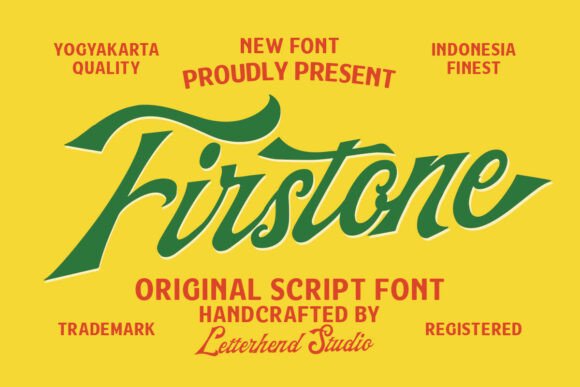
Understanding what makes Firstone tick requires a look at its anatomy. The typeface features connected strokes that sweep with a confident, rightward slant. This isn't a timid italic; it's an athletic forward motion. The design balances chunky downstrokes, which provide visual weight and stability, with tapered returns. This interplay creates a lively rhythm, preventing the font from feeling static or heavy. The capitals, particularly the F, open with athletic swashes. The long entrance stroke on the F is a defining feature, offering an immediate point of visual interest and establishing a sense of proud, expansive beginning.
Practical details enhance its utility. The t features a wide cross stroke that doesn't just terminate but actively glides into the next letter. This thoughtful connection creates natural underline moments, a subtle but effective tool for adding emphasis or visual flow within a word or phrase. Rounded counters, smooth terminals, and a generous x-height ensure that words remain readable, even when set at the energetic angles inherent to its design. This focus on legibility is crucial; a decorative font that cannot be read at a glance fails its primary function.
Visual Depth and Styling Potential
Firstone distinguishes itself with a contrasting inline outline treatment. This isn't a solid block of color. The inline detail invites layered color applications and drop-shadow styling. A designer can fill the main stroke with one color and the inline with another, or use the inline as a highlight against a shadow, creating a sense of depth and dimension that flat scripts cannot achieve. This feature transforms the font from a simple text element into a graphic asset, ideal for logos, badges, and packaging where a tactile, almost embossed quality is desired.
The overall texture of Firstone feels handcrafted yet disciplined. It avoids the sloppiness of overly casual scripts and the rigid uniformity of purely digital fonts. This balance makes it remarkably versatile. It is equally at home on a vintage-inspired poster as it is on a restaurant menu, a product label, or a sports team uniform. The font's personality conveys warmth, speed, and pride. These are not abstract qualities but direct emotional cues it communicates to an audience, making it a strategic choice for branding that needs to connect on a human level.
Practical Applications and Target Audience
Who should consider using Firstone? Its strengths align perfectly with several professional and creative scenarios:
- Branding and Logo Design: For businesses in food and beverage, craft brewing, sports apparel, local boutiques, or any service wanting to project a friendly, established, and energetic identity. The font's built-in character can form the core of a strong visual brand.
- Editorial and Packaging: Magazine headlines, book covers, or product packaging that needs to catch the eye on a shelf. The inline outline and color layering capabilities allow for sophisticated, shelf-ready designs.
- Event and Environmental Graphics: Posters, banners, signage for events, or team merchandise. Its billboard-ready punch ensures it holds up at scale and from a distance.
- Digital and Social Media: YouTube thumbnails, Instagram graphics, or website headers where a distinctive, memorable headline is needed to stop a scroll.
The primary audience includes graphic designers, marketing professionals, small business owners, and content creators. For a freelance designer, having a font like Firstone in a toolkit means being able to offer clients a specific, high-impact aesthetic quickly. For a business owner, it provides a way to achieve a professional, custom-looking design without commissioning bespoke lettering for every project.
Technical Considerations and Usability
A font's practical value is also in its technical execution. Firstone supports PUA (Private Use Area) encoding. This is a critical feature for professional use, as it provides seamless access to its full library of stylistic features, swashes, and alternates across all design software, from Adobe Illustrator to Canva. Designers won't be left guessing which key combination produces a particular stylistic flourish; they can access the entire glyph set through a standard character map panel.
When evaluating its performance in real-world use, consistency is key. The connected strokes and letter spacing need to function harmoniously. Based on its description, Firstone appears engineered for this, with the connections designed to flow naturally rather than feeling forced. The disciplined aspect of its handcrafted texture suggests that the letterforms are consistent in weight and proportion, which is essential for maintaining a professional appearance in logos and headlines where every pixel matters.
A Balanced Assessment: Strengths and Considerations
Firstone's strengths are clear: it offers a unique blend of vintage charm and modern graphic utility. The inline outline feature is a significant differentiator, adding a layer of depth and customization that many script fonts lack. Its readability at an angle is a major practical advantage.
However, like any specialized tool, it has its ideal context. Its bold, expressive nature means it is not suited for long body text. Using it for paragraphs would quickly lead to visual fatigue and poor readability. Its power lies in impactful, short-form applications: headlines, logos, single-word emphasis. Designers should also consider the overall tone of their project. While Firstone conveys warmth and energy, it may not be the right fit for brands seeking a minimalist, ultra-modern, or somber aesthetic.
For those whose projects align with its character—handcrafted charisma with sports-heritage flair—Firstone presents a robust and versatile option. It is the kind of typeface that can become a signature element in a designer's work or a cornerstone of a brand's visual identity, provided it is used with intention and in the right context. Its value lies in its ability to deliver a specific, high-quality emotional resonance efficiently and effectively.